Architecture
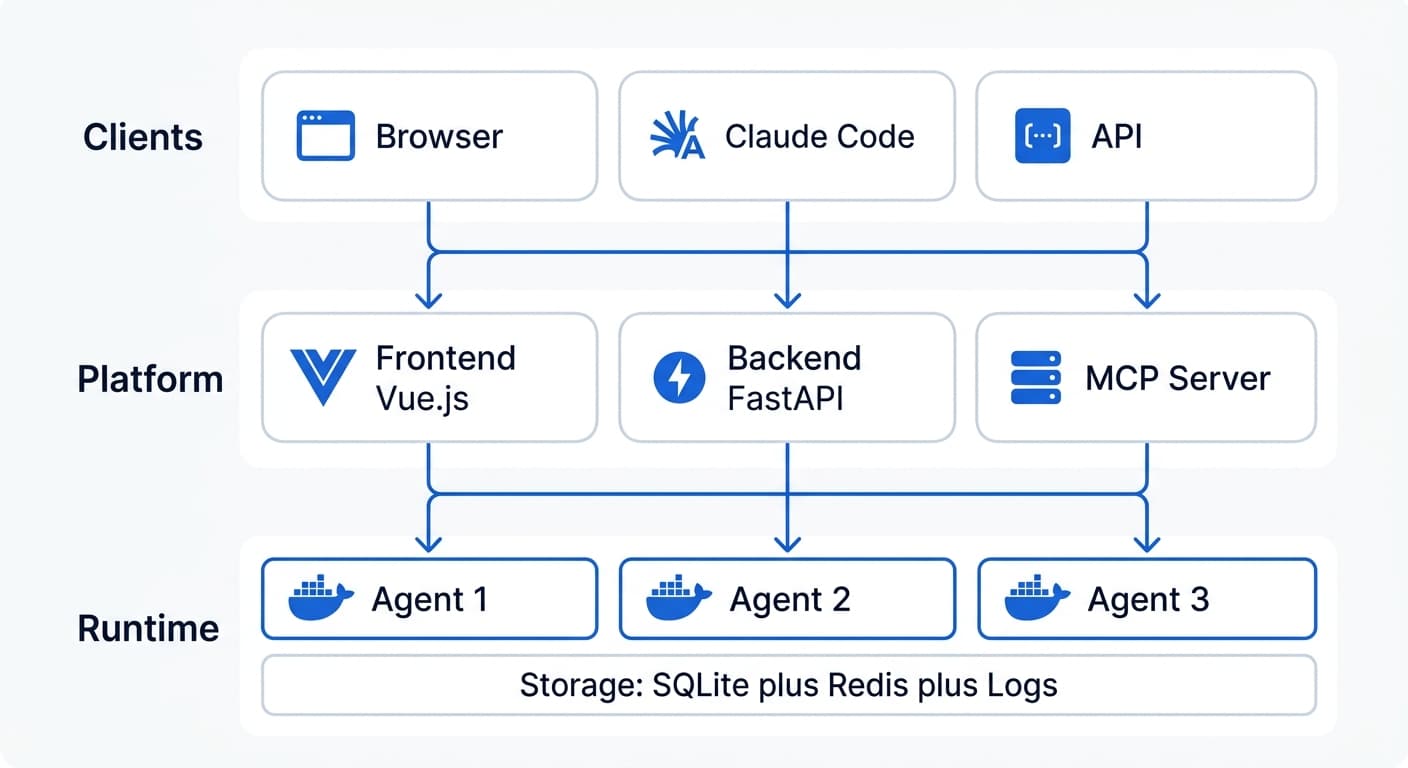
Trinity's architecture implements the Four Pillars of Deep Agency — the foundational capabilities that transform reactive chatbots into autonomous reasoning systems. Explore the operational systems, multi-agent collaboration patterns, and agent lifecycle that power the platform.
How Trinity Works
A 4½-minute animated film follows one scheduled task end to end — the agent, the admission gate, a mid-run delegation, a human approval, and the four systems around every run
System Overview
Dashboard, monitoring, the Operations page, and infrastructure components
Multi-Agent Collaboration
Agent network, event subscriptions, system manifests, and the Four Pillars of Deep Agency
Agent Lifecycle
Permissions, executions, and the full lifecycle from creation to deletion
Dashboard
Timeline, Grid, and List views, info tiles, and fleet overview
Operations Page
Unified tabbed view: operator queue, notifications, health, executions
Monitoring
Health checks, agent heartbeats, cleanup service, and the Health tab
Executions
Execution list, detail view, live streaming, and termination
Agent Reports
Structured results agents publish, with rendering, filters, and export
Agent Permissions
Inter-agent access control and who can call whom
Event Subscriptions
Pub/sub between agents with message templates
Shared Sessions (Rooms)
One shared, persistent conversation for agents and a human — a shared record, not a shared context
System Manifest
Recipe-based multi-agent deployment and configuration
Audit Trail
Append-only log of administrative actions for compliance and security
Product Telemetry & Fleet Sharing
Local-only product events by default, plus an admin opt-in sharing anonymized aggregates for fleet benchmarks
Agent Quotas
Per-role limits on agent creation with admin exemption
The Four Pillars
Hierarchical Delegation
The Orchestrator-Worker pattern enables agents to decompose complex goals into task graphs, delegating sub-tasks to specialized agents while maintaining context quarantine between execution boundaries.
Persistent Memory
Agents maintain state through per-agent Docker volumes, GitHub sync, shared folders, and dashboard files that persist across container restarts and evolve over time.
Extreme Context Engineering
Context is precisely engineered per-role, combining platform-level directives, role-specific CLAUDE.md files, skill definitions, and runtime state into coherent instruction sets that give the model exactly what it needs.
Autonomous Operations
Agents execute on cron schedules, monitor their own health via heartbeat checks, and recover from failures autonomously. The platform provides scheduling, alerting, and self-healing infrastructure.